

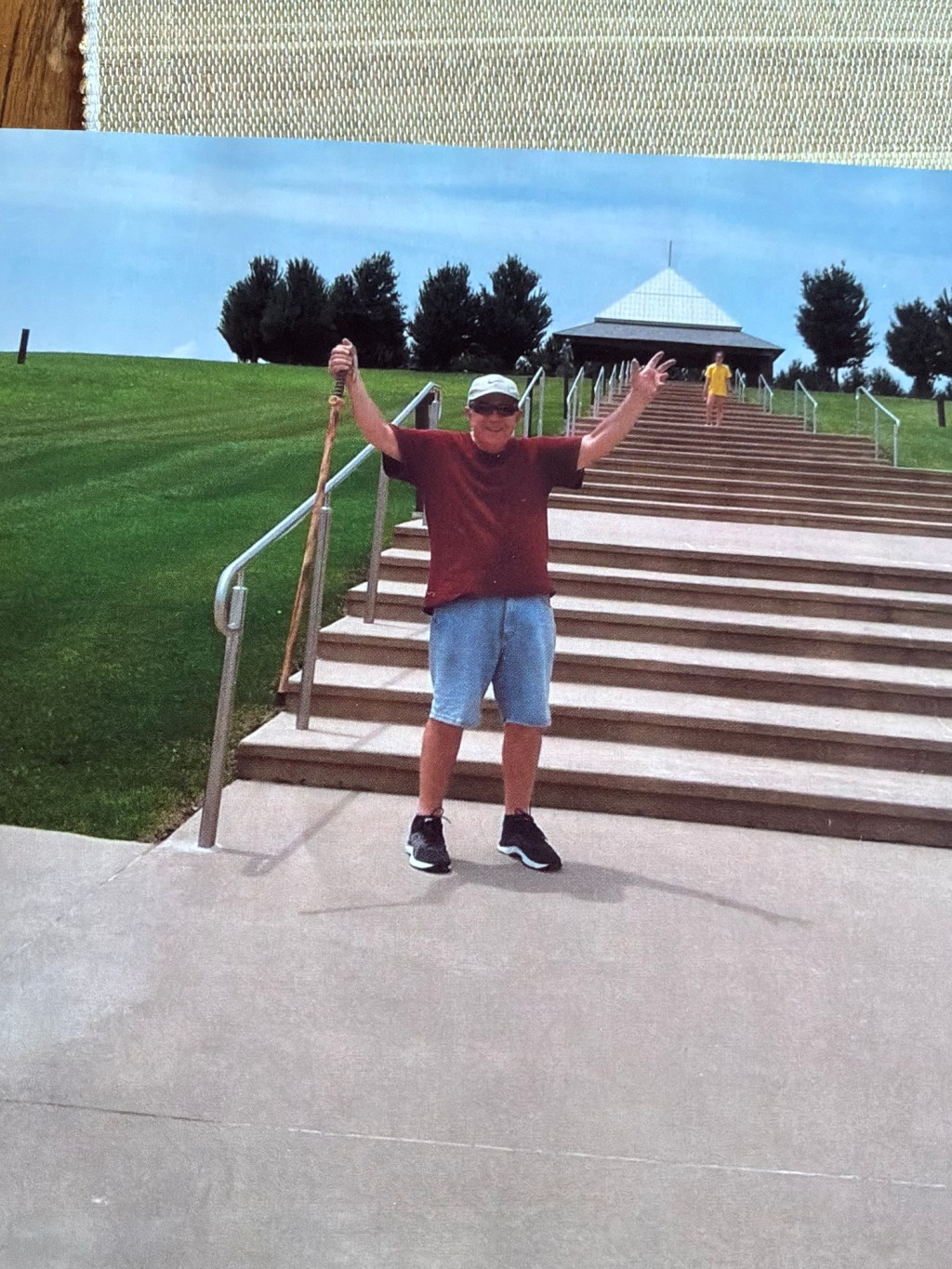
My dad was a difficult man. He was quick to anger, yet deeply attached to calm, routine, and things being done the “right” way. I grew up in a house where love was never spoken aloud. There were no hugs. No “I love yous.” Love wasn’t something you were told — it was something you were left to interpret.
He showed up in the ways that mattered to him. We went to private school. We lived in a nice home. Dinner was on the table every night, made by my mom. We went to church every Sunday, in sickness or health. Predictability, responsibility, and structure formed the spine of our home.
Affection did not.
Signs of love were rare — infrequent enough that I sometimes questioned whether I was imagining them at all. Because of that, I learned to notice the smallest moments, the ones that might pass unnoticed by someone else. I learned to catalog them quietly, as evidence.
One of those moments came years later, when I was already grown, married, with two young children of my own.
We had a dog named Stella — an Australian Shepherd we loved deeply. We’d gotten her in Stella, Missouri thus the name. She was loyal, gentle, and entirely ours. We made many memories with Stella over the years.
We were visiting my parents with our girls one afternoon when the phone rang. Stella had gotten out. She’d been hit by a car. A neighbor who knew us found her and rushed her first to my mother-in-law’s house, then on to the emergency vet in Joplin.
My husband at the time and I went straight there. Stella was alive, but seriously injured. Her hip was fractured. She was older — eight or nine — and the vet was honest. Surgery was possible, but the outcome would likely be pain, limitations, and suffering. Loving her meant choosing not to prolong it.
We stayed with her as she was put down. We brought her home.
My husband at the time went into the yard with a shovel to bury her. He was inconsolable — the kind of grief that leaves your body shaking and your thoughts unfinished. We had left the girls at my parents’ house, so I called my mom and dad and asked them to bring them home.
My dad pulled into the driveway in his truck. He helped the girls out, walked them to the door, and made sure they were inside.
Then he went back to his truck.
Without a word, he took a shovel from the bed and walked into the yard where my husband at the time was busy digging a whole big enough for our beloved dog.
And he started digging.
No words. No commentary. No correction. Just presence. Just work. Just one man stepping into another man’s grief without being asked.
That was love, expressed in the only language my dad seemed fluent in.
The first time I ever told my father I loved him was in a hospital room, one week before he died. He told me he loved me then too. It was real. It was just rare.
Love was not woven into our daily life. It wasn’t spoken or demonstrated often enough to be taken for granted. So I hold onto moments like that one — my dad silently helping bury our dog — as proof.
Proof that I was loved, even when I didn’t often see it.
Proof that love existed, even when it was quiet, infrequent, and imperfect.
Some people think love should be loud.
With my dad, it was a shovel in the dirt.
 Between living and letting go.